
How To Bid A Kitchen Remodel: Accurate Cost Guide
To bid a kitchen remodel, define the work in writing, inspect the site, estimate labor and materials, account for permits and project-specific risks, then calculate a price that covers both overhead and profit. A dependable bid makes clear what is included, what is excluded, which selections are allowances, and how changes will be priced.
In the United States, kitchen remodel bids must also account for local building requirements, state and local tax rules, and conditions such as older wiring or lead paint. Those requirements vary by jurisdiction, so verify them for the project address rather than relying on a national rule of thumb.
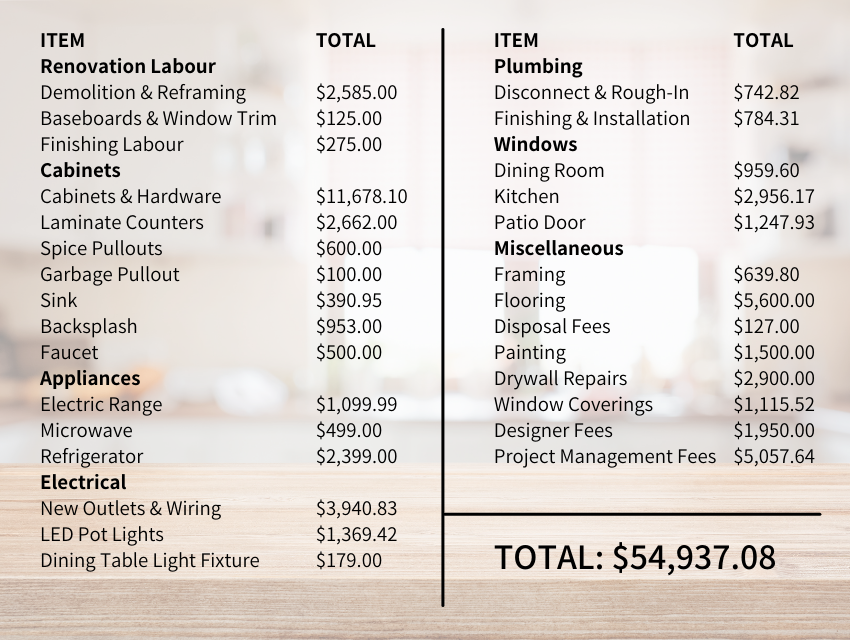
Clarify what “bidding a kitchen remodel” means
A contractor’s bid is a priced proposal for a defined scope of work. It is not simply a rough total or a list of material prices. The bid should show the homeowner what work the price covers and give both parties a process for handling selections, concealed conditions, and changes.
If you are a homeowner comparing bids, use the same principle: compare the scope and assumptions, not just the bottom-line totals. A lower price may reflect fewer tasks, lower allowances, or excluded work rather than a more efficient contractor.
Before estimating, confirm:
- Who is preparing the bid: a general contractor, kitchen remodeler, or individual trade contractor.
- Whether the contractor is pricing the whole project or only part of it.
- Whether the homeowner has selected cabinets, appliances, fixtures, flooring, and finishes.
- Whether the project is a cosmetic update, a replacement in the existing layout, or a remodel that moves plumbing, gas, or electrical service.
- Whether the property is occupied during construction.
- Whether drawings, specifications, or engineering are required before work can be priced confidently.
The more the remodel changes the kitchen’s layout or building systems, the more important it is to have a complete scope and verified site conditions before committing to a fixed price.
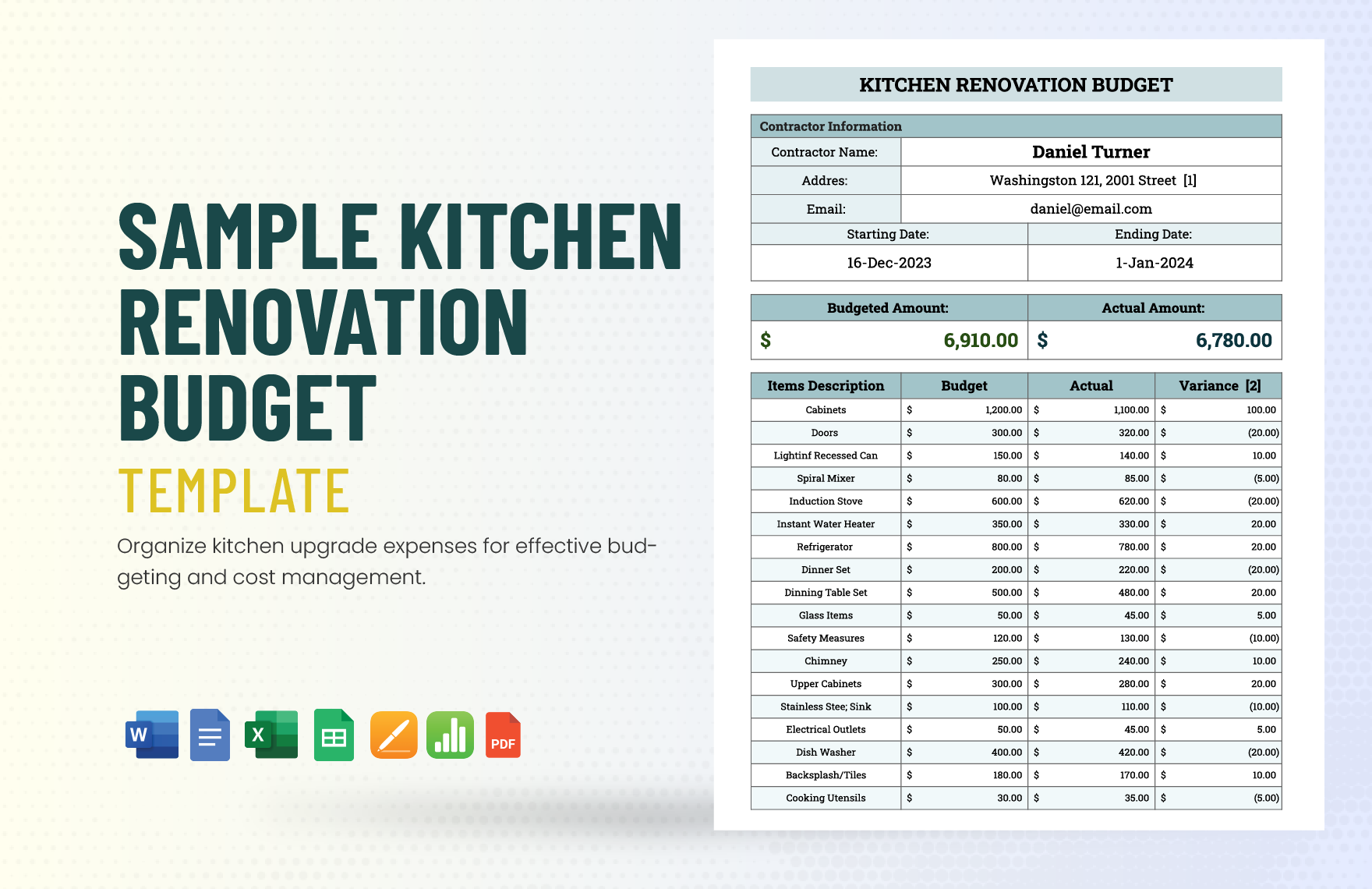
Inspect the kitchen and define the scope
Start with a site visit and a written scope. Do not price from a few photos if important measurements, access conditions, or existing systems remain unknown.
Measure the room and record the location and dimensions of doors, windows, ceiling changes, soffits, openings, and existing plumbing and electrical connections. Photograph the kitchen and adjacent areas. Note how materials will enter and leave the home, where workers can park, and whether the project needs floor protection, dust barriers, or temporary utilities.
Then write down the work in construction order. A typical kitchen remodel may include:
- Site protection and dust control.
- Demolition and disposal.
- Framing or structural changes, if specified.
- Rough plumbing, electrical, gas, and ventilation work.
- Inspections and required corrections.
- Drywall, plaster, or other wall repairs.
- Flooring, cabinets, and countertops.
- Backsplash, painting, trim, and finish work.
- Appliance and fixture installation.
- Cleanup, punch-list work, and closeout.
Use project-specific language. “Install cabinets” is less useful than identifying whether the bid includes removing the old cabinets, assembling the new ones, installing fillers and panels, leveling and fastening the boxes, fitting hardware, and coordinating countertop measurements.
Identify exclusions and unresolved conditions
State what the bid does not include. Common exclusions or separate pricing items may include:
- Design services, engineering, or architectural drawings.
- Appliance purchase or delivery.
- Temporary kitchen facilities.
- Repairs outside the defined work area.
- Structural repairs not shown in the plans.
- Work required because of concealed water damage, mold, pests, or unsafe wiring.
- Hazardous-material testing or abatement.
- Utility-company charges or unusual permit fees.
- Owner-requested changes after approval.
Do not label uncertain work “included” unless the price accounts for it. If conditions are unknown, explain how they will be investigated and priced if discovered.
In homes built before 1978, renovation work that disturbs painted surfaces may fall under the EPA’s Renovation, Repair and Painting (RRP) requirements. Confirm whether the rule applies to the property and work, and follow applicable federal, state, and local requirements. See the EPA’s RRP program information.
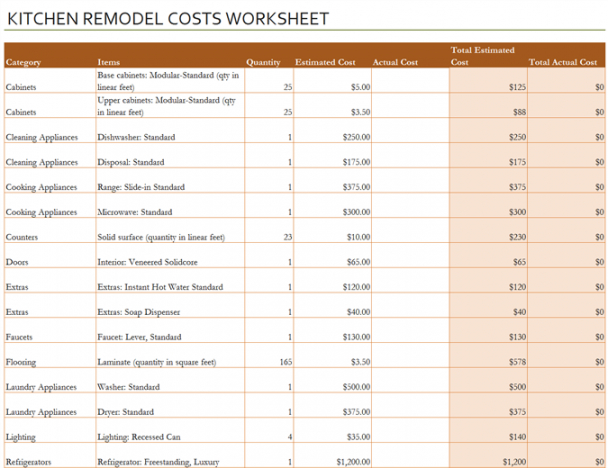
Estimate quantities, labor, materials, and trade costs
Build the estimate from the scope rather than starting with a desired total. Break the job into work items, calculate quantities where possible, and record the source of each cost.
A useful estimate separates direct costs from overhead and profit:
| Cost category | Examples |
|---|---|
| Labor | Demolition, carpentry, installation, project supervision |
| Materials | Cabinets, flooring, drywall, fasteners, trim |
| Subcontractors | Plumbing, electrical, HVAC, countertop fabrication |
| Equipment and delivery | Dumpsters, rental equipment, freight, material handling |
| Project-specific costs | Permits, inspections, protection, disposal |
| Overhead | Office costs, insurance, estimating, vehicles, general business expenses |
| Profit | The amount remaining after job costs and allocated overhead |
Calculate labor from tasks and hours
Estimate the hours for each task and multiply them by the appropriate burdened labor rate. A burdened rate includes more than an employee’s base wage; depending on how the business accounts for labor, it may include payroll taxes, workers’ compensation, benefits, and other labor-related costs.
A basic calculation is:
Labor cost = estimated labor hours × burdened hourly rate
For example, if a task is estimated at 24 hours and the burdened labor rate is $48 per hour, the estimated labor cost is 24 × $48 = $1,152. This is a hypothetical calculation, not a typical kitchen-remodel rate.
Estimate tasks separately where practical. Cabinet installation, demolition, finish carpentry, and site protection require different skills and may have different production assumptions. Include time for material handling, setup, cleanup, and coordination when those tasks are part of the job.
Build a material and trade takeoff
A takeoff is the list of materials and quantities needed to complete the work. Use plans, field measurements, product specifications, and supplier quotes where available. Check that the estimate accounts for details such as trim, fillers, panels, fasteners, underlayment, and delivery—not just the primary products.
For subcontractor work, obtain written quotes based on the same scope and plans. Confirm what each quote includes, such as permits, fixtures, patching, cleanup, and inspection coordination. If a trade quote is provisional, carry that uncertainty into the proposal rather than presenting it as a confirmed cost.
Track assumptions alongside the estimate. For example, record the cabinet line and finish, countertop material and edge, flooring product, appliance model, and any delivery charges used to develop the price. This makes it easier to update the bid if a selection changes.

Set the price, overhead, and profit
A bid must cover the job’s direct costs, the business’s share of overhead, and the contractor’s intended profit. Keep these components visible in the estimating process, even if the customer-facing proposal shows one contract price.
A simplified formula is:
Price = (direct costs + allocated overhead) ÷ (1 − target profit margin)
Suppose a hypothetical project has $30,000 in direct costs and allocated overhead, and the contractor targets a 20% gross profit margin:
$30,000 ÷ (1 − 0.20) = $37,500
The difference, $7,500, is the gross profit in this simplified example. It is not necessarily the contractor’s take-home income; other business expenses, taxes, and financial obligations may still apply.
Do not confuse markup with margin. A 20% markup on $30,000 produces a $36,000 price. That price has a $6,000 gross profit, or a 16.7% margin—not a 20% margin. Choose the calculation that matches the business’s accounting method and use it consistently.
Handle allowances and contingencies clearly
An allowance is a stated amount in the bid for an item that has not been selected or fully priced. It might cover a faucet, tile, or light fixture. Identify whether the allowance covers the product only or also includes tax, delivery, installation, and related materials. State how a selection above or below the allowance will affect the contract price.
A contingency is money set aside for uncertainty. Do not use an unexplained contingency to disguise missing scope. Separate known work from unknown conditions, describe the assumptions, and explain the approval process for additional work. If a contractor includes a contingency in the price, the proposal should make clear how unused funds are handled.
Check local requirements for sales tax, permit charges, licensing, and contract disclosures. These can vary by state and locality; do not assume one jurisdiction’s rules apply throughout the United States.

Write a complete kitchen remodel proposal
Present the bid in a format the homeowner can review and approve. A professional proposal should make the price understandable without requiring the customer to guess what it covers.
Include:
- Contractor and customer names, project address, and proposal date.
- A clear description of the work and the documents or plans used.
- Materials, products, and finish selections that are already known.
- Allowances and unresolved selections, with their terms.
- The total price and any clearly identified alternates.
- Payment schedule and applicable taxes or fees.
- Estimated start window and project duration, with schedule conditions.
- Permit and inspection responsibilities.
- Exclusions and assumptions.
- A written process for change orders.
- Proposal expiration date, if applicable.
- Required contract terms, signatures, and cancellation disclosures under applicable law.
Avoid vague phrases such as “complete kitchen renovation” unless the detailed scope defines what “complete” means. If the bid is based on drawings, identify their date or revision so both sides know which version was priced.
A schedule should be presented as an estimate unless the contractor can support a firm commitment. Material availability, inspection timing, customer selections, and concealed conditions can affect the sequence. Explain which decisions the homeowner must make, and by when, to protect the schedule.
For work involving electrical, plumbing, gas, structural changes, or other regulated work, confirm who is responsible for permits and inspections. Requirements differ by jurisdiction. The project team should check with the local building department before work begins.

Submit the bid and manage revisions
Walk the homeowner through the proposal rather than sending a total without context. Explain the scope, major cost drivers, allowances, exclusions, and the assumptions that could change the price. Give the customer a chance to correct misunderstandings about products or responsibilities before signing.
If the homeowner requests a different cabinet, countertop, appliance, or layout, revise the estimate using the changed scope. Record the difference in price and any schedule impact in writing. Once work is underway, document changes through a signed change order before performing the added or revised work, except where an urgent safety or property-protection issue requires immediate action under the contract and applicable law.
If the bid is not accepted, ask which part needs clarification. A request to “match” another bid is difficult to evaluate unless the competing scope, product quality, schedule, and exclusions are comparable. Recheck the estimate before reducing the price. Removing a clearly defined task or changing a specified product is more transparent than cutting an unexplained amount from the total.

Common kitchen remodel bidding mistakes
The most damaging bidding mistakes usually begin with an incomplete scope or an unverified assumption.
- Pricing from rough dimensions alone: Site conditions, access, and existing utilities can change labor and materials.
- Forgetting small but necessary items: Delivery, protection, disposal, fasteners, trim, and cleanup can add real cost.
- Using vague allowances: A product-only allowance may not cover tax, freight, installation, or related supplies.
- Treating unknown damage as included: State how concealed conditions will be evaluated and authorized.
- Mixing markup and margin: The same percentage does not produce the same price.
- Ignoring trade coordination: A price may omit patching, fixture connections, or inspection coordination between trades.
- Promising a firm schedule without dependencies: Identify selection deadlines, inspections, and material lead times that affect the work.
- Accepting verbal changes: Written change documentation helps prevent disputes about price and scope.
- Using one price for every jurisdiction: Permit and tax requirements must be checked locally.
A useful quality check is to have another qualified person review the scope against the estimate. Confirm that each stated task has labor, materials, and any required trade cost assigned to it, and that each estimated cost connects to work the proposal actually describes.

Key takeaways
- Define the project in writing before calculating the price.
- Inspect the kitchen, measure it, and document access and existing conditions.
- Estimate labor, materials, subcontractors, permits, delivery, and disposal from the scope.
- Add overhead and profit using a consistent calculation; do not confuse markup with margin.
- Label allowances, exclusions, and uncertain conditions plainly.
- Verify local permits, tax rules, contract requirements, and any applicable safety regulations.
- Use written change orders to document changes to price, work, or schedule.
Frequently asked questions
How long should it take to prepare a kitchen remodel bid?
The time depends on the project’s size, design readiness, and number of trade quotes required. A straightforward replacement kitchen may be estimated more quickly than a remodel involving layout changes, structural work, or unresolved product selections. Do not issue a firm price until the scope and major cost assumptions are sufficiently clear.
Should a kitchen remodel bid be fixed-price or time-and-materials?
A fixed-price bid can give the customer a defined price for a clearly documented scope, but it requires reliable plans, selections, and assumptions. Time-and-materials pricing can fit work with substantial uncertainty, but the proposal should explain labor rates, material charges, documentation, and any spending controls. The appropriate arrangement depends on the project and applicable contract rules.
What is the difference between an estimate and a bid?
In everyday use, the terms are sometimes used interchangeably. A contractor should state whether a document is a preliminary estimate that may change as details are confirmed or a formal proposal offering a defined price for a stated scope. The contract and local law determine the parties’ actual obligations, not the document’s label alone.
Should permits be included in a kitchen remodel bid?
The bid should say who will obtain required permits and how permit fees are treated. Whether a kitchen project needs permits depends on the work and the local authority’s rules. Check with the building department for the project address before assuming that a like-for-like replacement is exempt.
How should a contractor compare their bid with a competitor’s lower price?
Compare the scope line by line: products, labor, permits, disposal, protection, allowances, exclusions, and change-order terms. If the scopes are equivalent, review the labor and supplier assumptions. If they are not, revise the comparison before deciding that one price is simply cheaper.
Conclusion
A reliable kitchen remodel bid is built from a clear scope, a careful site review, and costs tied to specific work. Before submitting it, check that the proposal explains its assumptions, allowances, exclusions, schedule dependencies, and change process. Then verify local requirements for permits, taxes, and contracts before the customer approves the work.